
HYPERSONIC VEHICLES
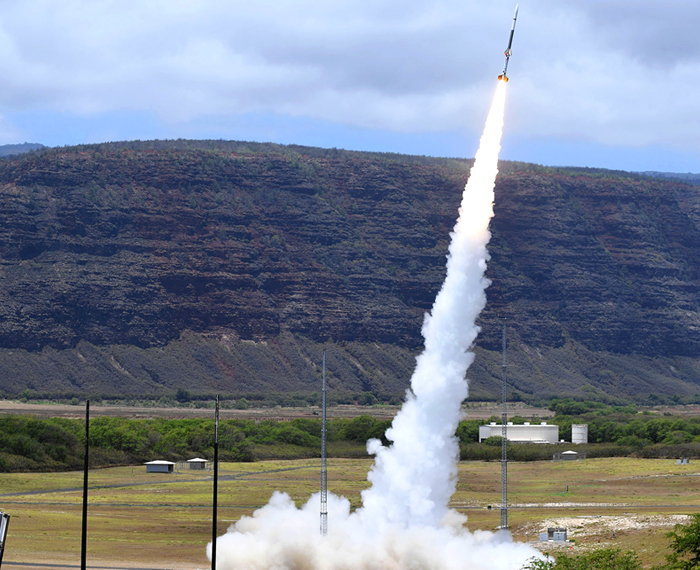
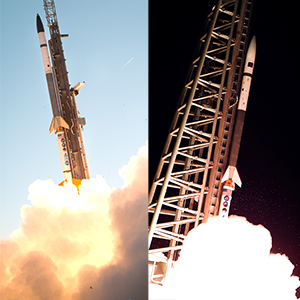
HYPERSONIC VEHICLE TESTING – SOUNDING ROCKETS & GLIDE VEHICLES
MEASURING LAUNCH FORCES, VIBRATION & TEMPERATURE ON HYPERSONIC VEHICLES
Testing Challenges:
- In situ testing of hypersonic glide and boost-glide vehicles (HGV), hypersonic cruise missiles, experimental aircraft, and sounding rockets
- Collecting force, vibration, shock, strain, temperature, and more
- Varied test scenarios: laboratory, sled, flight testing/in situ
- Harsh test environments, including wide temperature ranges
- Size, weight, and power constraints
- Complex, time-intensive test setups
- Short development cycles; limited access to test articles
- Long lead times on test instrumentation
DTS Key Features:
- SWaP-optimized (size, weight & power) data acquisition units
- Rapid deployment, embeds in the test article, no long cable runs
- High-shock rated, wide operating temps & environmental ratings
- Universal analog sensor support
- Onboard memory and real-time streaming (CH10, IENA or TmNS)
- Time synchronization via IEEE 1588 PTPv2
- Standalone, network, or integrate into an existing FTI solution
- Supports short-duration and sustained flight testing applications
- COTS products; standard 4-6 week delivery
DTS ADVANCED MEASUREMENT SOLUTIONS - MINIATURE | RUGGED | HIGH-SPEED
RECOMMENDED DTS PRODUCTS FOR HYPERSONIC VEHICLE TESTING
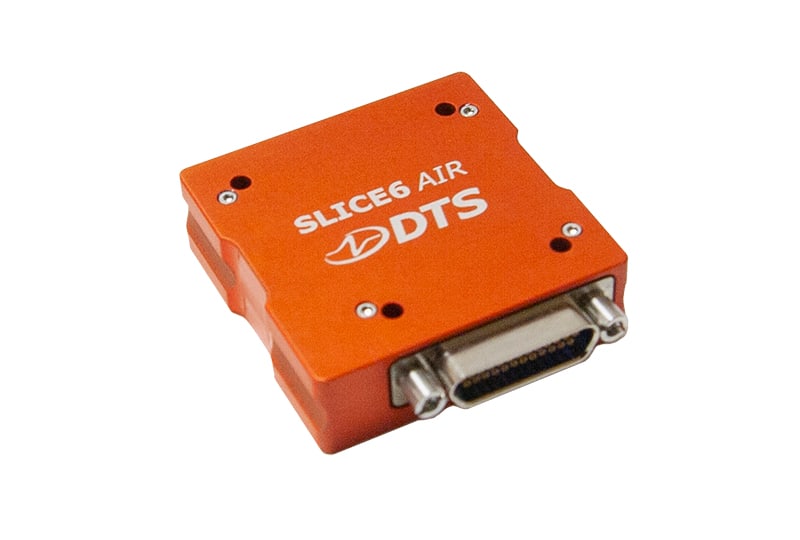
SLICE6 AIR
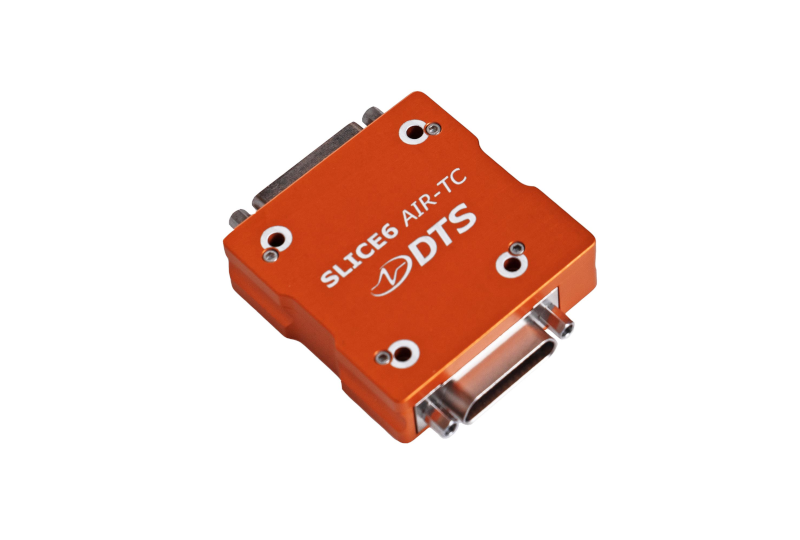
SLICE6 AIR-TC
Video & Images Courtesy of Sandia National Laboraties / Hypersonics Glide Body – Photo Courtesy of U.S. Navy