SAE International Honors DTS Director Steve Moss

SAE International Honors DTS Director Steve Moss

SAE International Honors DTS Director Steve Moss

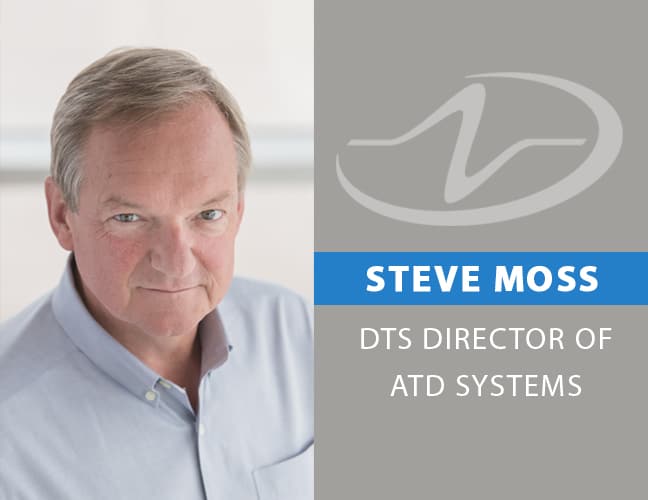
Diversified Technical Systems (DTS) is proud to announce that SAE International has honored Steve Moss – DTS Director of ATD Systems – with the 2017 James M. Crawford Technical Standards Board Outstanding Achievement Award.

The award recognizes individuals for outstanding service in the technical committee activities of the Society. This includes valuable contributions to the work of SAE International technical committees, unusual leadership in the activities of an SAE International technical committee, significant contributions as a representative of the Society to the accomplishments of technical committees of other organizations or of government agencies, and outstanding contributions to SAE International technical committee work in the form of research, test methods and procedures, and/or development of standards.

The James M. Crawford Fund was established in 1953 and honors James Crawford, who was SAE International President in 1945. In 2013, the award previously known as the Technical Standards Board Outstanding Achievement Award, was renamed the James M. Crawford Technical Standards Board Outstanding Achievement Award.

 Mr. Moss was born and educated in the United Kingdom and received a BSME from University of Hertfordshire in 1977. He worked as an automotive engineer at Rover UK, and GM and Ford in Detroit in the occupant safety and crash test and analysis fields for 15 years. Mr. Moss was the Technical Director at First Technology Safety Systems (now Humanetics ATD) from 1995 to 2005 in charge of crash dummy development. He now works for DTS in the Novi, Michigan office and is in charge of the WIAMan underbody blast dummy development, a project for the U.S. Army. He is an active member of several SAE and ISO Standards Committees, including the Safety Test Instrumentation Standards Committee for over twenty years. Moss has previously received the SAE International Ralph H. Isbrandt Automotive Safety Engineering Award.

Corporate

DTS & U.S. Army Celebrate WIAMan Test Lab

DTS & U.S. Army Celebrate WIAMan Test Lab

DTS & U.S. Army Celebrate WIAMan Test Lab

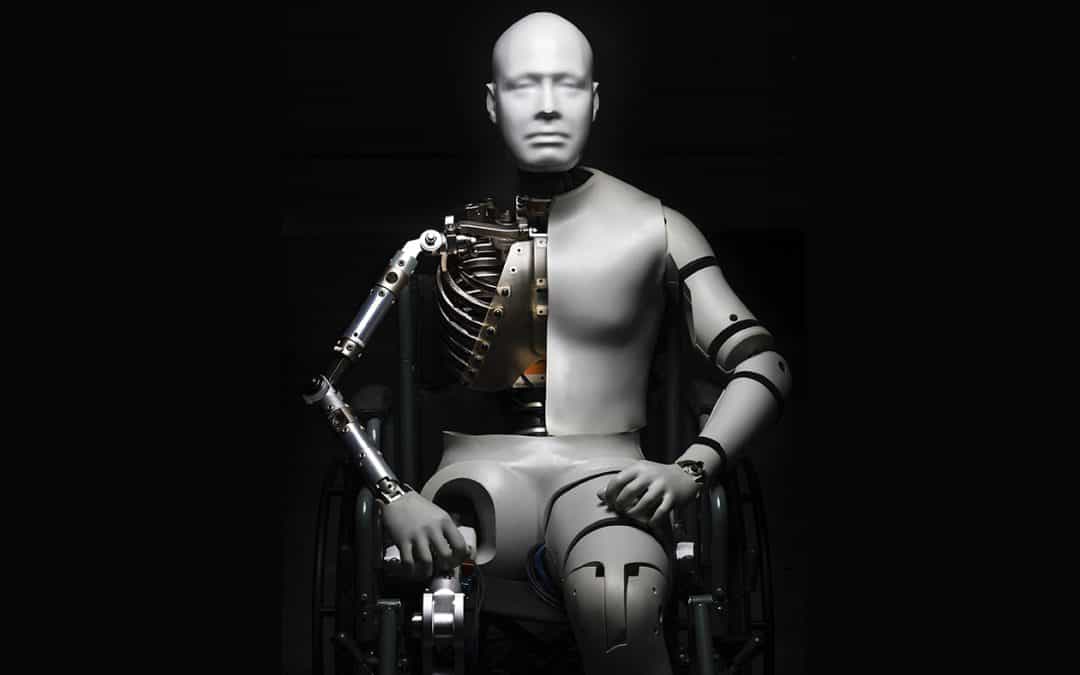
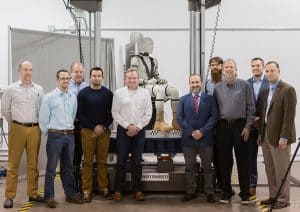
Seal Beach, CA (February 2017) – Nearly 100 DTS employees and several key U.S. Army personnel gathered for the official ribbon-cutting ceremony at the new WIAMan ATD Lab located inside DTS headquarters in Seal Beach, California. The new lab is being used exclusively to support the design, development and testing of the first blast test dummy, officially called the Warrior Injury Assessment Manikin (WIAMan). DTS is the Prime Contractor to the U.S. Army for the WIAMan project, which is the first anthropomorphic test device (ATD) designed specifically to withstand underbody blasts (like IEDs). The goal of all WIAMAN testing is to advance soldier protection and improve military vehicle designs.
The new 3,000+ sq. ft. lab is furnished with state-of-the-art test equipment including an 11-foot drop tower used to simulate the vertical impact experienced by an occupant in a vehicle blast. A 5-point harness secures WIAMan in the drop tower seat while a 200g pulse simulates blast forces. Load cells in the seat measure five different load paths through the pelvis and femur to quantify potential spine and lower extremity injuries. A linear impactor performs iterative testing on lower leg and pelvis components, accelerating a 20kg impact mass to a velocity of 20 meters/sec. Analyzing gross motor movement in slow motion helps engineers better understand the forces soldiers experience in the field, so multiple high speed cameras capture the action at over 100,000 frames/second.

“The program provides a state-of-art test capability to assess potential skeletal injuries of Soldiers exposed to under-body blast,” said Fred Hughes, director of the WIAMan Engineering Office. “The manikin’s sophisticated biofidelity and robust sensor design provides an unmatched level of accuracy determining the potential effects of blast on Soldiers in new vehicle systems. The WIAMan effort is an example of outstanding collaboration among academia, industry, and the government.”

The WIAMan project is especially important because no human surrogate for blast testing exists today. Automotive crash test dummies have been used in the past, but they are built to withstand frontal and side impacts, not the vertical acceleration of an under-body blast. The multi-year project includes not only building the new ATD, but also a next generation in-dummy sensing and data acquisition solution that goes inside the dummy.

To measure potential skeletal injuries, WIAMan currently uses 146 channels of embedded data acquisition and sensors, but is designed to support up to 180 channels. The self-contained miniature data acquisition systems are distributed throughout the test manikin and include internal power and a variety of sensors. The data collected includes six degree of freedom of forces, moments, accelerations and angular velocities from sensors located along the pelvis, spine, tibia and foot/heal. The data WIAMan will measure has far reaching, life-saving implications not only in the development of safer military vehicles and tactical gear, but to families around the world.

About DTS: Founded in 1990 by three crash test engineers, DTS data recorders and sensors are used worldwide in crash, blast and biomechanics testing by top automakers, aerospace and leading research facilities. The U.S. Army named a DTS helmet sensor as one of “The Greatest Inventions.” Inc. Magazine has named DTS three times as one of the fastest-growing private companies in the U.S. Based in Seal Beach, California DTS has technical centers in Michigan, Australia, China, Japan and the U.K.

DTS Data Recorders Help NASA Assess Splashdown Impact on Orion Crew

DTS Data Recorders Help NASA Assess Splashdown Impact on Orion Crew

DTS Data Recorders Help NASA Assess Splashdown Impact on Orion Crew

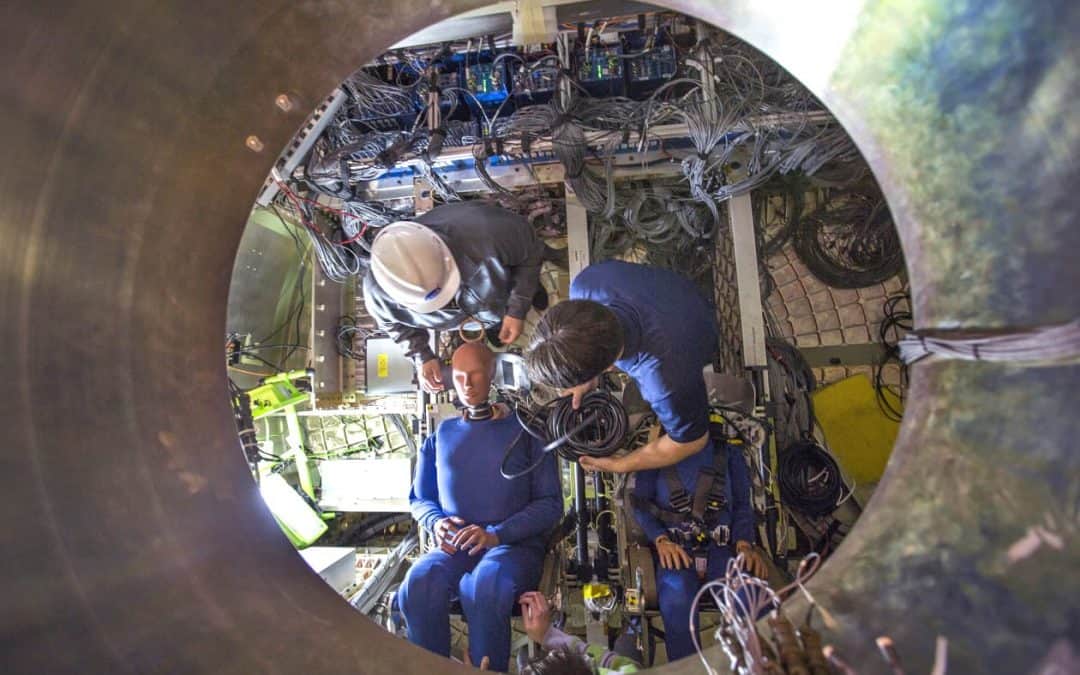
DTS OnBoard NASA Orion Capsule

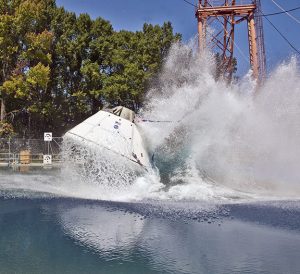
Seal Beach, CA (Sept. 2016) – Engineers at NASA’s Langley Research Center in Hampton, Virginia, will conduct nine water-impact drop tests to evaluate the Orion spacecraft and crew safety when they return from deep-space missions and touch down on Earth’s surface. Onboard will be two test dummies wired up to Diversified Technical System (DTS) data acquisition systems that will ride along to collect critical test data as NASA prepares Orion for its next mission, Exploration Mission-1. During Exploration Mission-1, the uncrewed Orion spacecraft will launch atop the Space Launch System (SLS) rocket, travel more than 40,000 miles beyond the moon and return at speeds up to 25,000 mph.
Water-impact testing is one of many steps required to ensure Orion will meet the demands of sending humans to deep space for the first time and in the future on the journey to Mars, which is why extensive testing is so critical. Engineers at Langley will mimic various scenarios by dropping a mockup of Orion, coupled with the heat shield from the spacecraft’s first flight, into Langley’s 20-foot-deep Hydro Impact Basin.

This will help NASA evaluate how the spacecraft may behave when landing under its parachutes in different wind conditions and wave heights. Langley has already conducted dozens of splash tests with DTS data recorders inside a less sophisticated capsule mockup, but this is the first time it will assess the higher fidelity Orion ground test article. Unlike many data recorders, DTS systems are so small and lightweight that they fit on-board and run autonomously to collect both structural and crew safety data.

“We are excited about this testing because we’ll have suited-up test dummies inside the capsule,” said Ellen Carpenter, Langley project manager. “Including test dummies will help NASA ensure the crew is protected from injury during splashdown in future missions.”

“These test dummies are the same type of test dummies that are used in the automotive industry for front collisions,” said Rick Ybarra, test engineer at NASA’s Johnson Space Flight Center.

Each dummy was lifted and then manually installed into the interior of the capsule. Prior to installation, engineers placed tiny sensors inside the test dummies, which will be used to help NASA understand the loads the crew could experience when returning from deep space destinations.

Before testing begins, engineers will apply a waterproof coat to the capsule and complete final sensor checks with a DTS data acquisition system. The capsule itself is wired with sensors that allow engineers to collect data during the water-impact testing.

“Preliminary work is key to a successful drop,” Carpenter explained. “It allows the sensors to be verified ahead of time, so that the most accurate test data can be acquired.”

For over 15 years, NASA has used DTS data acquisition systems to capture critical test data on helicopter hard landings, test Emergency Locator Transmitters (ELTs), and even onboard the LDSD-low density supersonic decelerator in the outer stratosphere. Providing accurate test data prior to real-life missions is an important part of research for understanding crash dynamics and improving occupant safety in any arena.

For more information on DTS data acquisition systems, visit www.dtsweb.com or contact sales@dtsweb.com.

Horiba MIRA Selects DTS DAS

Horiba MIRA Selects DTS DAS

Horiba MIRA Selects DTS DAS

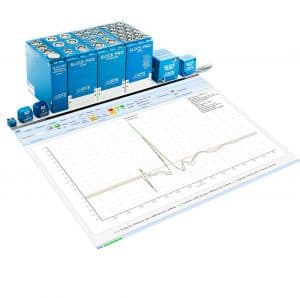
DTS rugged data acquisition systems are designed specifically for crash, blast and in-dummy testing.

DTS Data Acquisition Selected by HORIBA MIRA
as Part of £16m Investment in UK Test Facilities

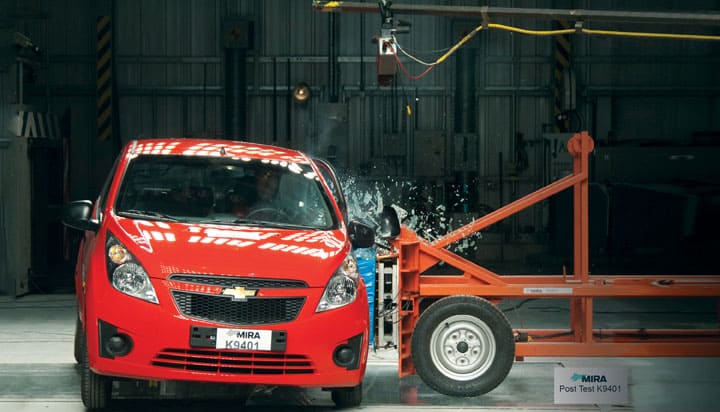
Seal Beach, Calif. (May 2016) – Diversified Technical Systems (DTS) data acquisition systems have been chosen by HORIBA MIRA Ltd. as part of a £16m investment to upgrade the company’s UK test facilities. MIRA will phase in 1,000+ channels of DTS data acquisition systems (DAS) companywide, including at their Euro NCAP accredited Safety Test Centre.

According to MIRA’s official announcement, the miniature data recorders will allow “quicker vehicle preparation and installation” for test set-ups. DTS SLICE NANO will be part of the new in-dummy DAS solutions for the state-of-the art World SID and Q Series crash test dummies, which are used for required consumer (NCAP) tests to assess occupant injury risk. “These investments will significantly increase the test capacity within the facility, as well as ensure HORIBA MIRA can continue to provide testing to all global test standards,” MIRA stated.

Additionally, DTS data acquisition systems will be installed in MIRA’s world-renowned Proving Ground, High Energy Crash Centre, Kinematics & Compliance Facility, and Climatic Wind Tunnel. The SLICE data recorders will be used to collect critical test data for chassis, durability, impact testing, as well as occupant and pedestrian testing.

For more information contact www.dtsweb.com or sales@dtsweb.com.

HELP CENTER